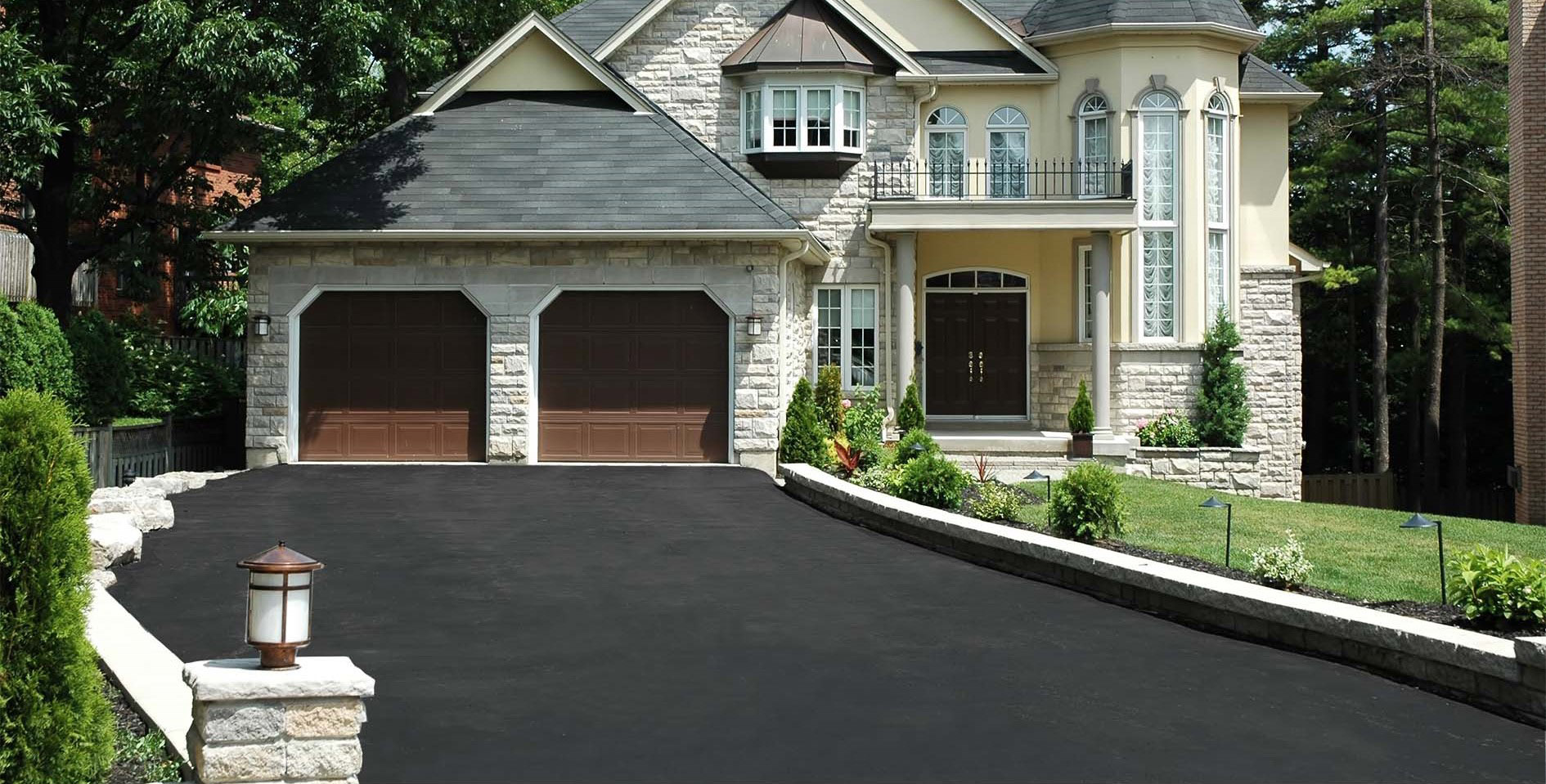
Q: How thick should asphalt be for a driveway?
A: Most residential driveways require 2", 2-1/2", or 3 inches of compacted asphalt, installed on a solid base. Two inches works for light residential use.
Three inches provides added strength, durability, and resistance to cracking, especially in our freeze thaw climate. We recommend thickness based on your traffic, and long term goals, not a one size fits all number.
Q: What if my soil has clay in it?
A: Clay soil is common in the Okanagan and Shuswap, and it’s one of the biggest reasons driveways fail. During our evaluation, we assess: Soil composition, Drainage behavior, Load bearing strength. If clay heavy soils are present, we may recommend deeper excavation and rebuilding the base with properly placed and compacted 3" Minus and 3/4" minus crushed aggregate. Why this matters:
Clay holds water and shifts. Addressing it upfront prevents cracking, sinking, and costly repairs later. We explain all options clearly before work begins, no surprises.
Q: Will cracks come back?
A: Asphalt expands and contracts with temperature changes, especially in the Okanagan’s freeze thaw climate. While no asphalt surface can be guaranteed never to crack, long lasting driveways are the result of how they’re built, not luck.We reduce cracking by rebuilding the driveway correctly from the ground up. That includes removing clay and weak soils where needed, installing and compacting a stable base, managing drainage so water can’t freeze beneath the pavement, and placing asphalt at the proper thickness and compacting it while it’s still hot. When those steps are done right, cracking is far less likely and the driveway lasts much longer.
Q: Do you fix drainage issues?
A: Yes, and we do it before any asphalt is placed.
Water is the number one cause of driveway failure. If it isn’t handled first, the asphalt on top won’t last, no matter how thick it is.
During our site visit, we look at:
How water flows across and off your driveway
Low spots where water sits or freezes
Runoff coming from roofs, hillsides, or neighboring properties
Soft or saturated base areas under the existing driveway
If we find drainage problems, we correct them before paving.
That may include:
Re-grading the base so water sheds
properly
Adjusting slopes to move water away from the driveway
Installing or correcting drainage features where needed
Removing wet or unstable material that would trap moisture
We don’t pave over standing water, soft ground, or drainage issues and hope for the best. That’s how cracks, sinking, and frost damage show up later.
Any drainage work is clearly explained and written into your quote, so you know exactly what’s being done and why. If drainage doesn’t need correction, we’ll tell you that too. The goal is simple: keep water out of the structure of the driveway so it stays solid for years, not just the first season.
Q: I'm planning new construction. Do you offer asphalt paving for new construction projects?
A: Yes. We work with homeowners and builders on new construction projects. This includes: New driveways, Parking areas, Access roads, Complete base construction, and paving. We coordinate with site grades, drainage, and other trades to ensure the asphalt is installed at the correct time, not rushed or compromised.
Q: How long does asphalt paving last?
A: A properly built asphalt driveway typically lasts 20-30 years, and often much longer. The key factor isn’t the asphalt itself.
It’s the base prep, drainage, and installation quality underneath. Many of the driveways we replace aren’t old, they were simply built wrong.
Q: What types of asphalt do you use?
A: We use high quality hot mix asphalt, selected based on how the surface will be used. Residential driveways:
Smooth, clean finish driveway mix designed for daily vehicle traffic.
Commercial & heavy use areas:
Tougher transport grade asphalt built for trucks, turning, and wear. The right mix combined with correct thickness is critical to long term performance.
Q: What does your free evaluation include?
A: Our free evaluation includes:
On site inspection of your existing surface or site.
Assessment of base conditions and drainage.
Discussion of your goals and usage.
A clear, written quote with recommended options.
There’s no pressure and no obligation, just straightforward advice so you can make an informed decision.
Q: When is the best time of year to pave asphalt?
A: The best time to pave asphalt is spring through summer, when temperatures consistently support proper compaction. While paving can be done in cooler conditions, optimal temperatures produce the best long term results. We’ll always be honest about timing, if conditions aren’t right, we’ll tell you.
Q: Can new asphalt be laid over existing asphalt?
A: Sometimes. But only if the existing base is solid. An asphalt overlay can work when:
The underlying structure is stable.
Drainage issues are addressed.
Cracks and failures aren’t structural.
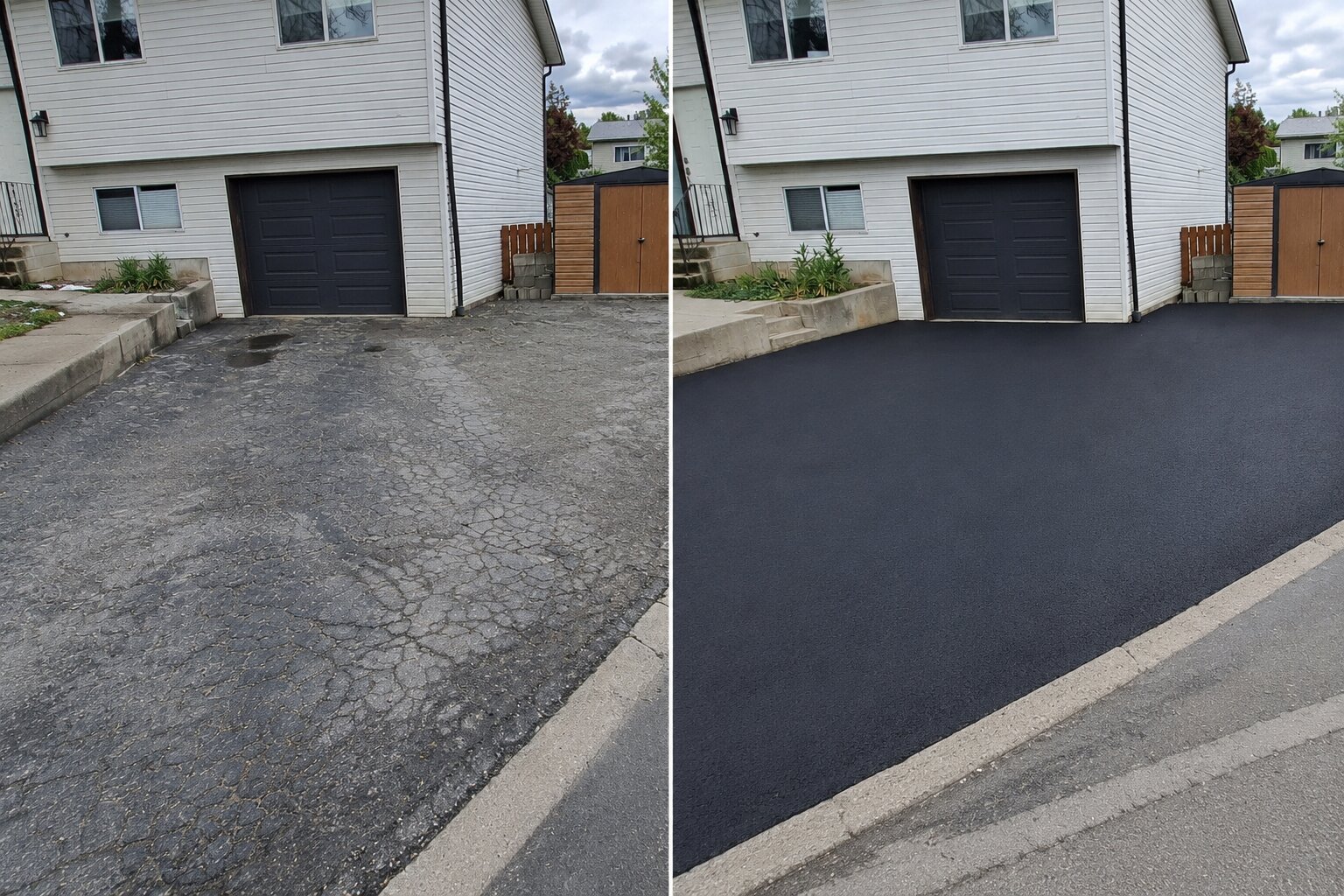
If the base has failed, an overlay only hides the problem temporarily. We’ll advise you honestly on what makes sense for your situation.
Q: When should asphalt be sealed?
A: New asphalt should be sealed about 12 months after installation, once it has fully cured.
After that, sealing every 2 to 3 years helps:
Protect against moisture and UV damage.
Maintain appearance.
Extend surface life.
We’ll provide care guidance after your project is complete.
Q: Why is your price higher than some other quotes?
A: Because we rebuild driveways properly.
We don’t pave over problems, cut base thickness, or skip drainage steps to win jobs on price. Our work costs more upfront, and far less over time.
If you want the lowest number, we may not be the right fit.
If you want a driveway built to last, we should talk.
Q: Do you offer a warranty?
A: Yes. We include a 1 year warranty.